Slab Foundation Repair in Fort Worth: Pilings, Piers and Tendons
Slab foundation repair in Fort Worth is less about the concrete than the clay under it. A slab bends when one part of the ground shrinks or swells more than the rest, and the repair gives the low part something firmer to stand on.
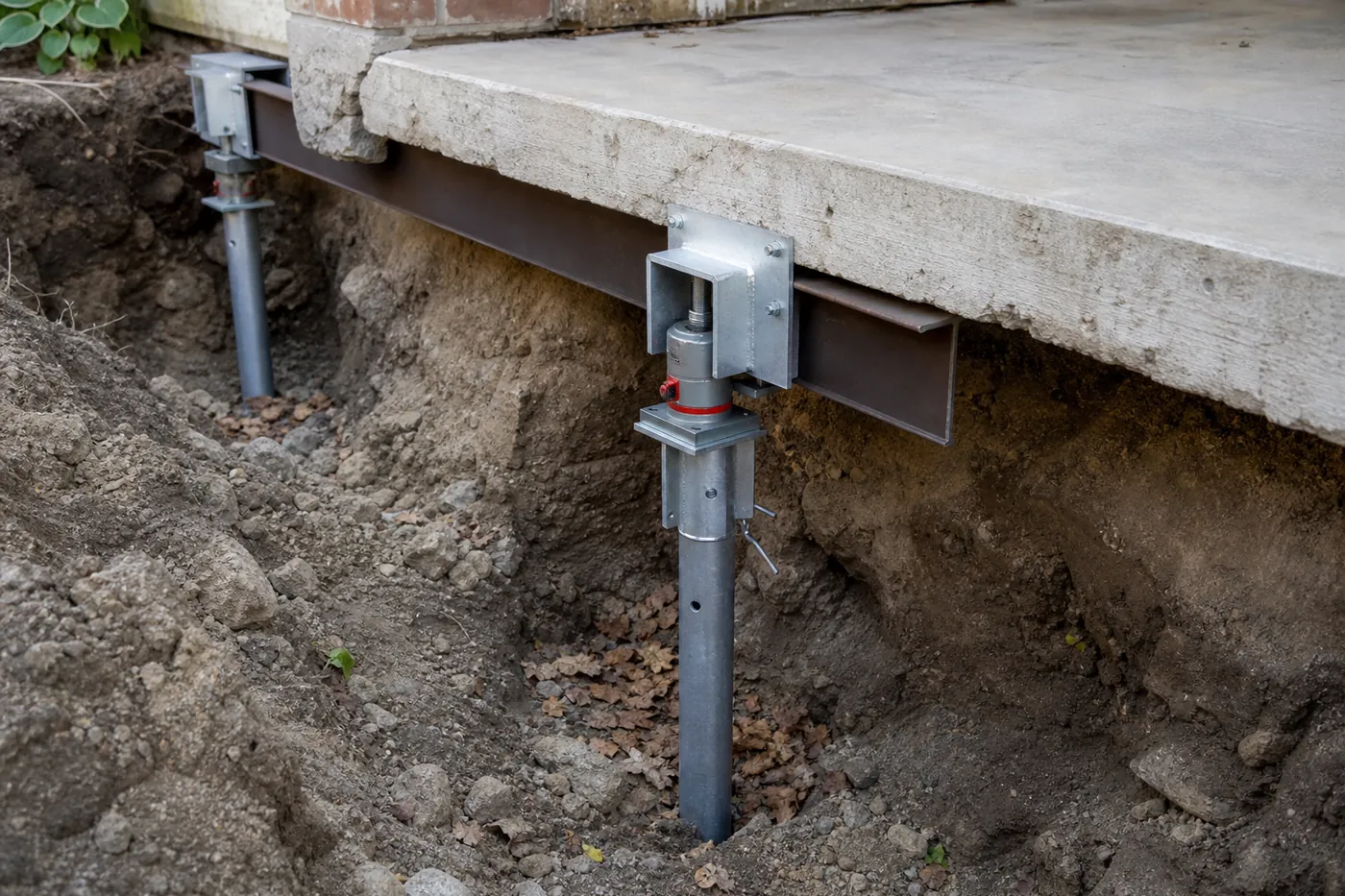
Most slab foundation repair in Fort Worth means pressing concrete pilings or steel piers under the low part of the slab and lifting it back toward level. Fixr (2026) puts slab repair at $1,000–$10,000 and each pier at $1,000–$3,000. The city requires engineered plans with the permit.
Edge drop or center lift?
Slabs on clay move in two broad patterns. In a long dry spell the soil at the edges dries first and shrinks, so the perimeter drops: brick cracks open, often stair-stepping from the corners of windows, and exterior doors bind. After a wet stretch the reverse can happen, with the edges swelling and rising, or with the middle of the slab staying wet and high while the edges fall away, leaving a hump near the center of the house. Sanger clay, the county's most extensive soil, is rated high for shrink-swell (USDA NRCS). Floor elevations taken across the house show which pattern you have. Piers answer settlement; a hump caused by water calls for finding the water first.
Slab foundation repair methods: pressed pilings or steel piers?
- Pressed concrete pilings. Short precast concrete cylinders are stacked and pressed into the ground with a hydraulic jack under the slab's edge beam until they will go no deeper, then the slab is lifted and shimmed on top of them.
- Steel push piers. Sections of steel pipe are driven down through a bracket bolted to the beam, using the weight of the house as resistance, and usually reach deeper than pressed pilings.
- Helical piers. Steel shafts with screw plates are turned into the ground, often where loads are lighter.
- Drilled concrete piers. Holes are drilled and filled with reinforced concrete, a slower method that an engineer may specify for a particular soil.
Ground conditions change across Tarrant County: Aledo soils sit 9 to 20 inches above limestone, while Sanger clay runs very deep (USDA NRCS). Which pier suits your lot belongs in the engineer's plan, not a sales sheet.
Does a post-tension slab change the repair?
Many newer slabs are post-tensioned: steel tendons run through the concrete and are pulled tight after it cures. A cut tendon can release with great force, so nobody should core, saw or drill a post-tension slab without first locating the cables. Lifting such a slab on piers is routine; cutting into it is where the care goes. A stamped warning in the garage floor or the builder's plans will often tell you which kind you have.
Where foam or mudjacking fits
Mudjacking and polyurethane foam fill a hollow under concrete and float it back up. They suit driveways, walks, patios and garage aprons that sank where soil washed or settled away beneath them; Fixr lists mudjacking at $500–$1,900 (2026). They do not reach below the clay that moves a house, so a house slab that keeps dropping is usually a pier job. Compare every method side by side in the Fort Worth foundation repair cost guide.
Questions homeowners ask
Can a slab be lifted perfectly level again?
Rarely, and it should not be forced. Many slabs were never perfectly level when poured, and jacking too hard can crack the concrete or the brick above it. The goal is to bring the low area back within the tolerance the engineer sets and to stop further settlement. Ask for floor elevations before and after the lift so you can see the change.
What is the house doing?
One line is plenty: a crack up the brick, a door that quit latching, a floor that tilts toward the kitchen. One independent foundation specialist who works in Fort Worth will get in touch to talk it over.